TERMINOLOGY
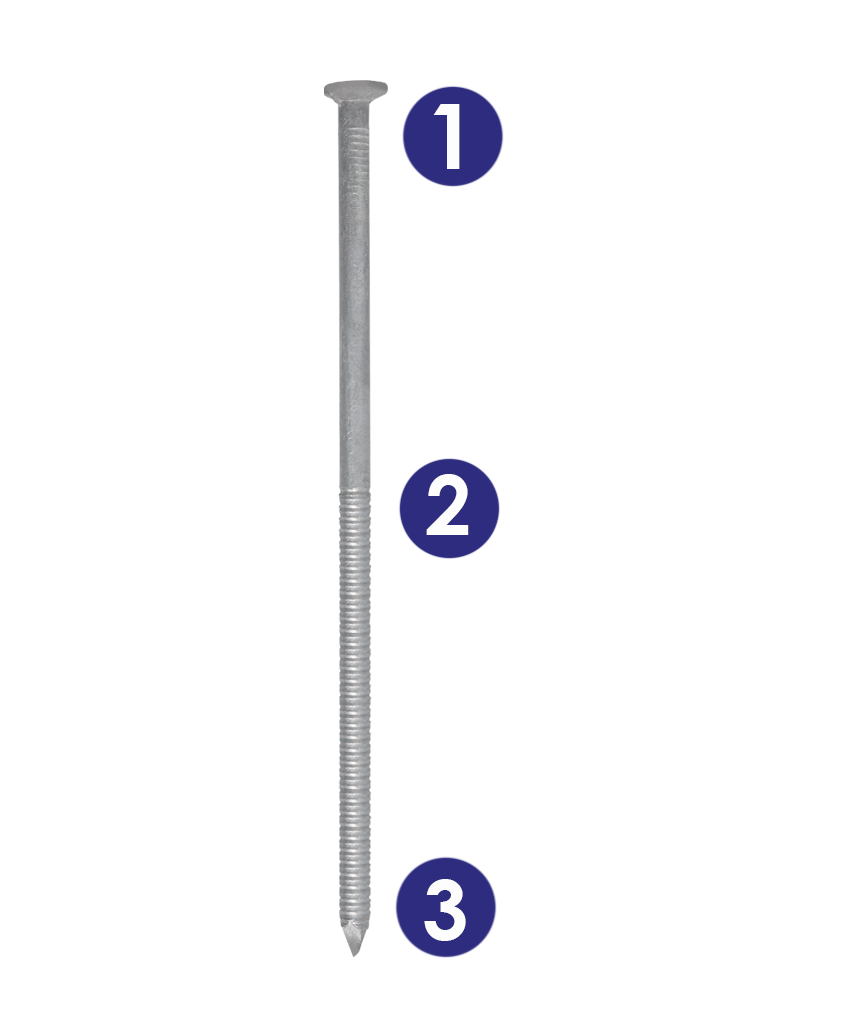
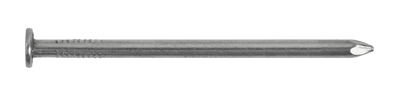
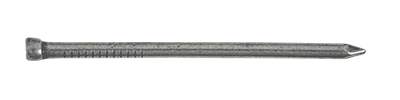
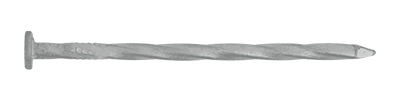
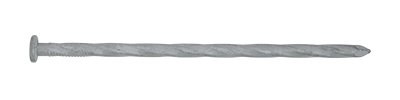
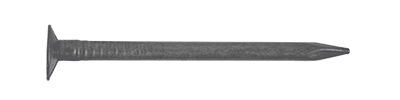
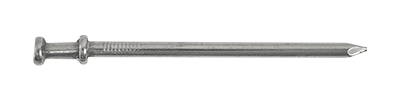
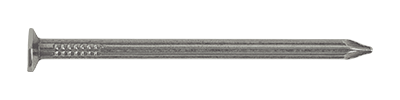
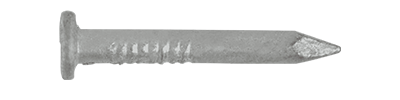
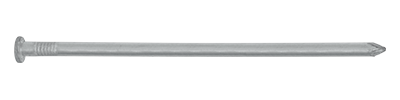
- HEAD
Round metal piece formed at the top
of the nail. - SHANK
The length of the nail between the
bottom of head and the point. May be
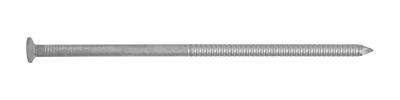
smooth or have rings, flutes or spirals
for greater holding power. - POINT
Sharpened end opposite the head for
greater ease in driving.
GAUGE
Reference how thick a nail is, with lower
number indicating greater thickness.
LENGTH
Distance from the bottom of the head to the
point of a nail.
RIGIDITY
The bending and shear resistance of a nail
COATINGS
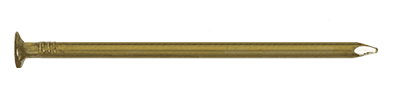
BRITE
No coating to protect the nail from corrosion if exposed to high humidity or water,
not recommended for exterior use or treated lumber, and only for interior applications where no corrosion protection is needed, i.e. interior trim, framing, and finish.
HEAT-TREATED
Heated to extreme temperatures and then cooled quickly; this produces very hard
steel that can be used with hardened materials such as concrete and masonry. This
is still vulnerable to corrosion, and should be used in interior applications.
PHOSPHATE COATED
Reduces friction during installation and increases corrosion protection. Produced
by dipping in a solution of zinc or manganese acid phosphate; it has a dark grey
finish that provides a surface that binds well with paint and joint compounds with
minimal corrosion resistance. Most commonly found on drywall fasteners, not
recommended for exterior and treated lumber.
VINYL COATED
A slick vinyl coating helps ease driving of the fastener-when the fastener is driven,
it’s briefly heated by the friction and quickly cools down, hardening the vinyl coating;
offers some extra holding power but does not protect the fastener from corrosion;
recommended for interior applications where no corrosion protection is needed.
ELECTRO GALVANIZED
Zinc plating process in which a layer of zinc is bonded to steel to protect against
corrosion; smooth, shiny finish, which is generally used in areas where minimal
corrosion protection is needed.
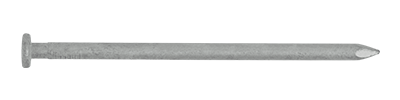
GALVANIZED
Coated with a protective layer of zinc for corrosion resistance and weather exposure.
HOT DIPPED GALVANIZED
Most common method of galvanization where iron, steel or aluminum are coated
with a thin zinc layer, by passing the metal through a molten bath of zinc that results
in very high corrosion resistance suitable for some acidic and treated lumber; will
corrode over time as the coating wears, but generally good for the lifetime of the
application; typically used in outdoor applications–meets ASTM A153.
STAINLESS STEEL
Used where both the properties of steel and corrosion resistance are required; although
stainless steel does not readily corrode, it isn’t fully stain proof-certain conditions can
and do affect it such as low oxygen, high salinity, or poor circulation environments; 300
series stainless makes up 70% of all stainless used, and is the most corrosion resistant,
ductile, and weldable type of stainless steel; these alloys are subject to crevice corrosion
and pitting corrosion.
304 / 305 grade alloys are the most versatile and widely used of stainless steels-
contains 18% chromium and 8% nickel; recommended for exterior applications where a
higher level of corrosion resistance is desired.
316 (also called marine grade) has superior corrosion resistance versus other
chromium-nickel steels when exposed to chemical corrodents such as sea water; slightly
more nickel and the addition of 2% molybdenum is what makes 316 considerably more
resistant to corrosion than the 304 family; recommended for marine environments.
21° PLASTIC STRIP
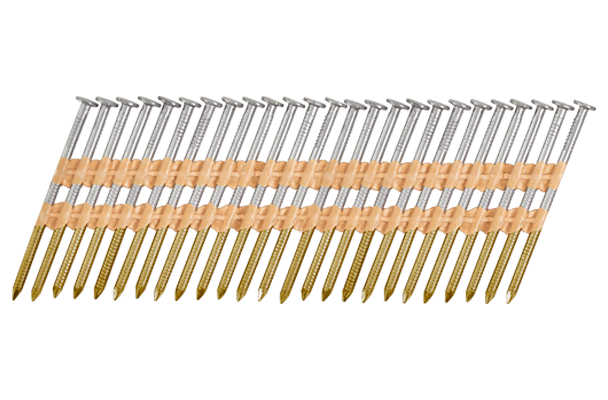
BRIGHT, ELECTROGALVANIZED OR COATED FASTENERS
Should not be used in treated lumber and where surface rust is unacceptable
EXTERIOR GALVANIZED OR HOT DIPPED FASTENERS
Meet ASTM A 153 Class D and are approved for outdoor use with all types of treated lumber
21° PLASTIC STRIP
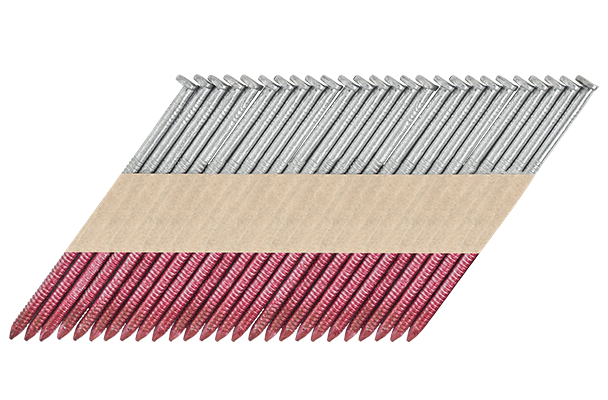
BRIGHT, ELECTROGALVANIZED OR COATED FASTENERS
Should not be used in treated lumber and where surface rust is unacceptable
EXTERIOR GALVANIZED OR HOT DIPPED FASTENERS
Meet ASTM A 153 Class D and are approved for outdoor use with all types of treated lumber